About Project
Web para Todos
A platform that audits the accessibility of any public website in seconds, based on WCAG 2.1 and eMAG 3.1. Free, no sign-up. From product design to the analysis engine, built end to end by me — and live at webparatodos.com.br.
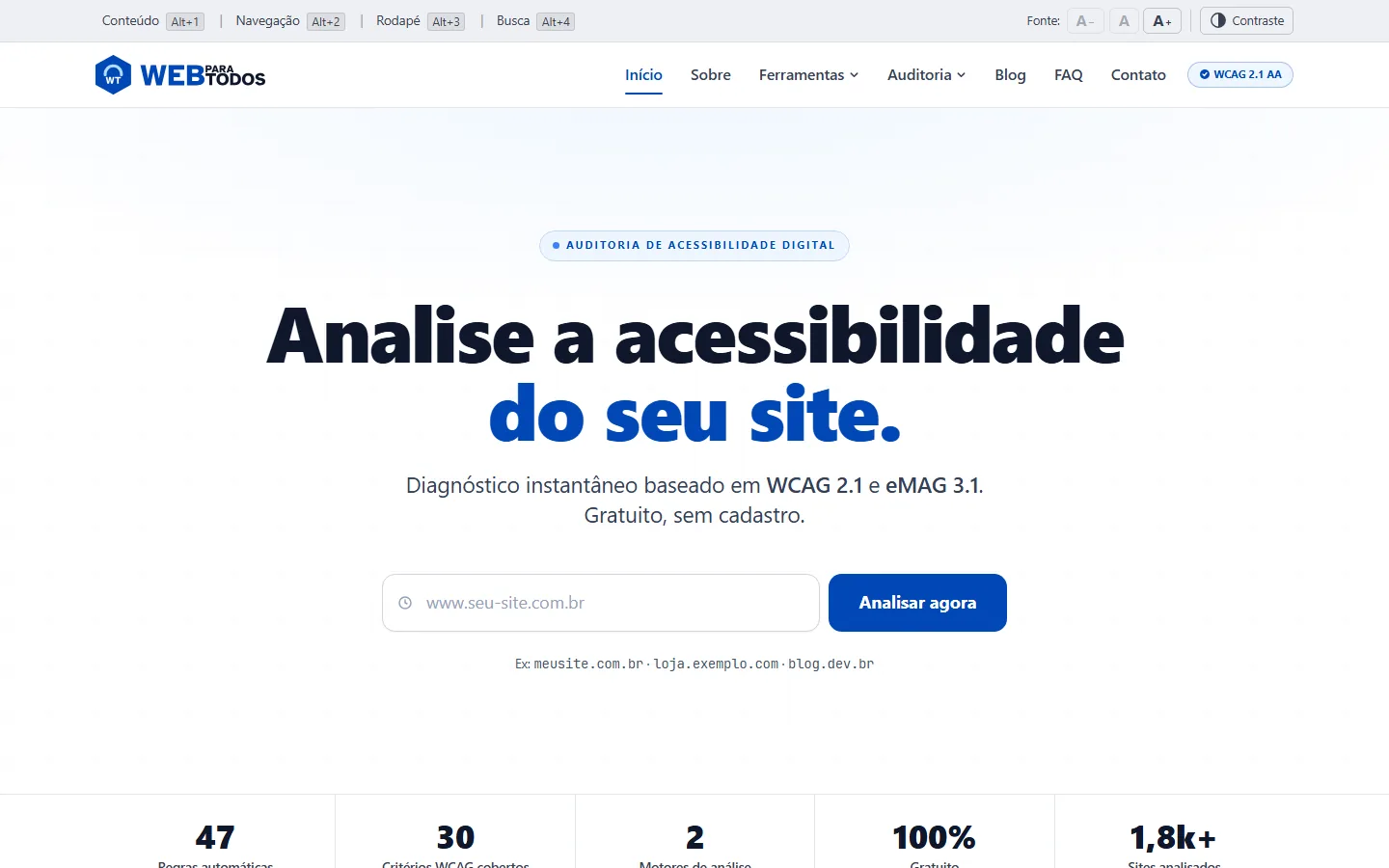
A single entry point: paste the URL, get the diagnosis.
In-house product: strategy, design and end-to-end development.
- Two analysis engines and 47 automated checks;
- Diagnosis with severity, criterion and remediation guidance;
- eMAG checklist, site comparison and normative reference;
- A free, direct experience with no sign-up.
47
Automated rules
WCAG + eMAG30
WCAG criteria
covered2
Analysis
engines54
eMAG criteria
in the checklist1.8k+
Sites analysed
and counting
Why build this
Accessibility discussions still happen without evidence or depend on tools made for specialists. What was missing was a clear diagnosis, aligned with WCAG and eMAG, that any manager could open and understand.
Product decisions
-
01
No friction before the value
No sign-up, no plan, no email. The first screen is a URL field and a button. Every step between intent and diagnosis is a chance for someone to drop out — and an accessibility tool nobody uses makes nothing accessible.
-
02
Two engines, because one lies
One engine reads the raw page; the other opens the page for real, in a browser, and analyses what a person actually sees. Without the second, modern sites would come back as empty, perfectly accessible pages. The double coverage is what makes the result defensible.
-
03
The report teaches, it doesn't just accuse
Every violation comes with a severity, the criterion breached, the real impact per type of disability, and the wrong code next to the right code. Pointing at the error is easy; what changes the outcome is the person knowing how to fix it.
What this project proves
More than 1,800 sites have already gone through the tool. The project demonstrates technical accessibility expertise and the ability to translate a complex normative subject into an experience anyone can use.